
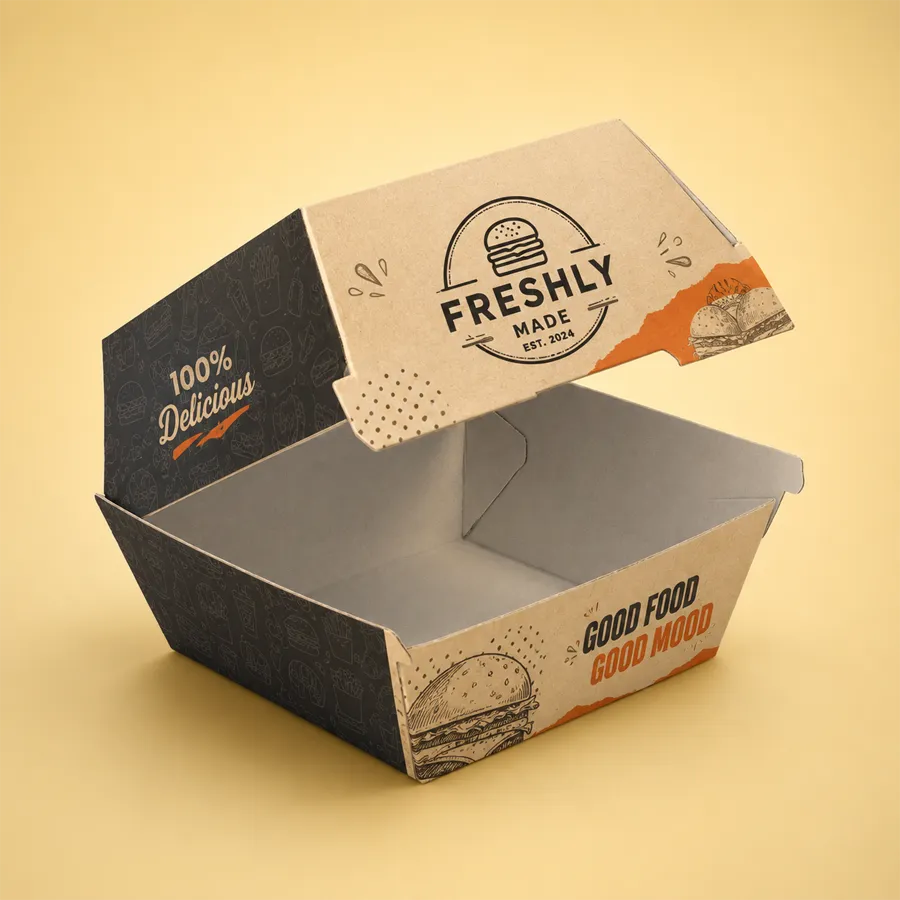
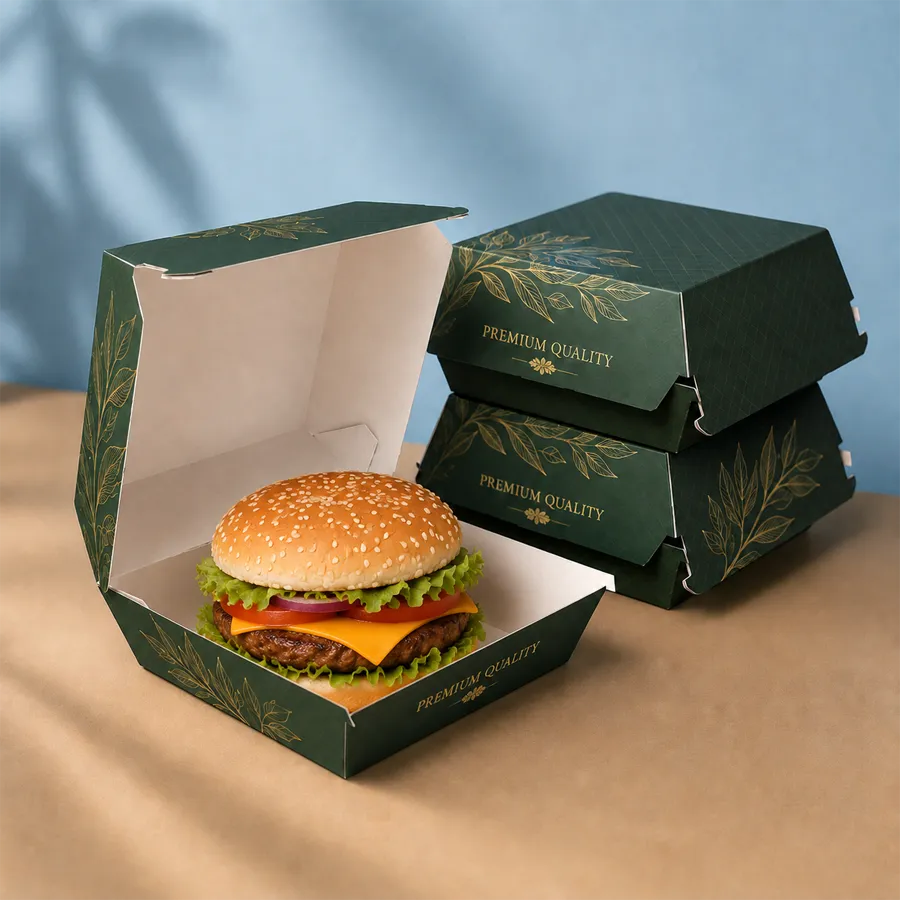
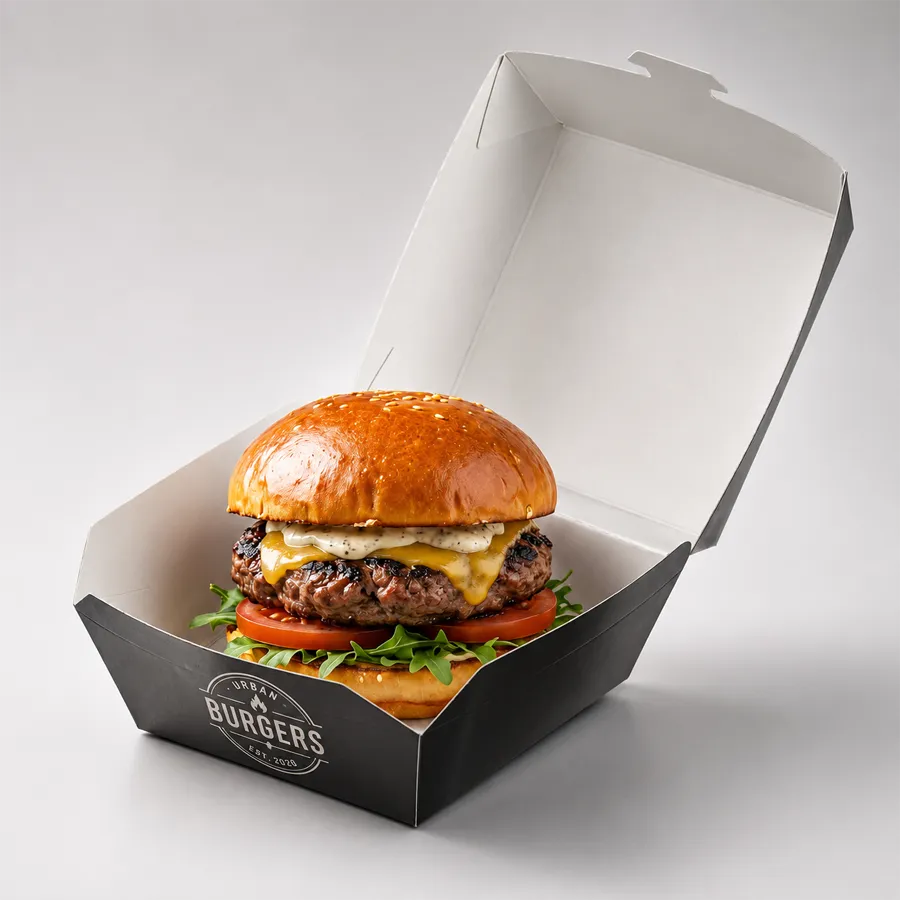
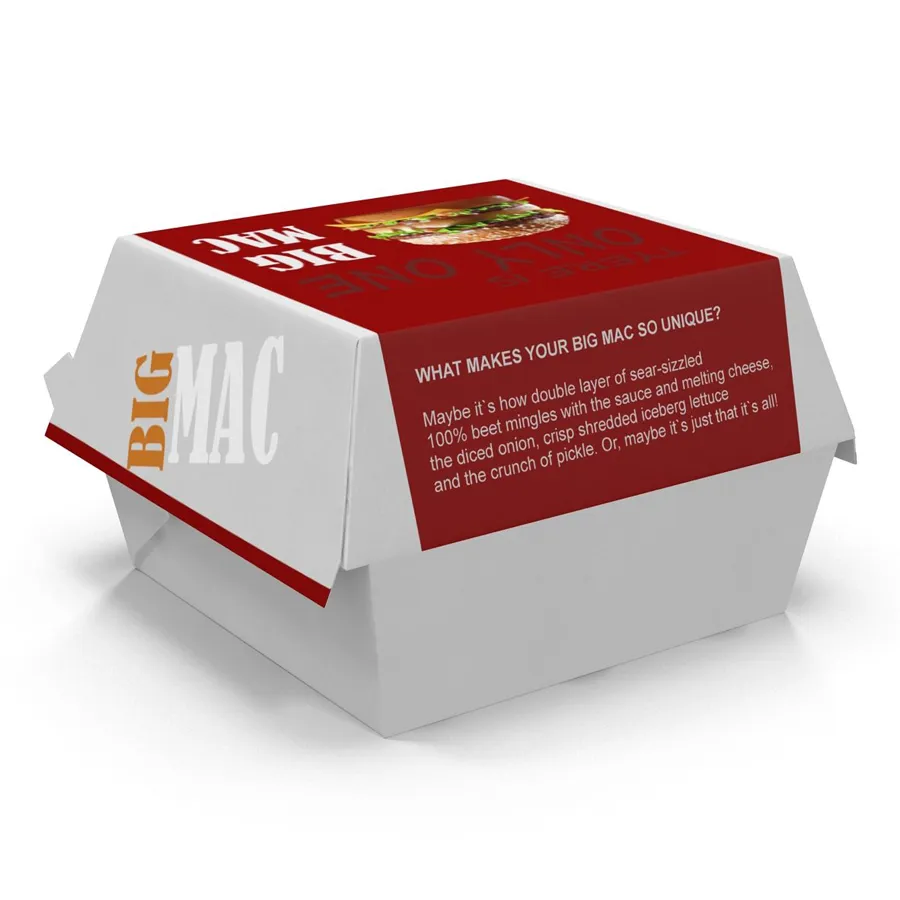
Keep burgers fresh, organized, and protected with custom burger boxes made for dine-in, takeaway, and delivery orders. Choose grease-resistant materials, tailored dimensions, ventilation, secure closures, and branded printing for sliders, regular burgers, and gourmet portions.
Description
Custom burger boxes provide a secure and attractive way to package freshly prepared burgers for dine-in, takeaway, and delivery orders. They protect the bun and fillings, contain sauces and grease, and make finished meals easier for employees and customers to handle. Every box can be customized according to the burger’s diameter, height, ingredients, weight, and intended serving method.
Generic packaging may compress a tall burger or leave too much empty space around a smaller portion. A properly fitted box supports the burger without pressing against the bun, cheese, toppings, or sauces. Custom sizing also improves presentation and allows restaurants to create separate packaging for sliders, standard burgers, double patties, chicken burgers, and gourmet menu items.
The choice of material affects box strength, grease resistance, appearance, print quality, and transportation performance. Paperboard is a popular option for lightweight and standard takeaway burgers because it is easy to fold and provides a smooth surface for printing.
Kraft paperboard has a natural brown appearance that works well for casual restaurants, organic food brands, and businesses that prefer simple packaging. Cardboard delivers additional rigidity for larger burgers and longer takeaway journeys. Restaurants needing stronger structures can use cardboard burger boxes for improved support.
Corrugated material may be selected for meal combinations, bulk orders, or delivery cartons carrying multiple products. The required thickness depends on the burger’s weight, the distance it will travel, and whether the packaging will be stacked.
Burgers may contain meat juices, cheese, sauces, pickles, salad, and fried ingredients that release grease or moisture. Standard untreated paper can become weak or stained when exposed to these substances. Suitable grease-resistant stock or a food-compatible barrier helps the packaging maintain a cleaner appearance and stronger structure.
The required resistance level should be selected according to the food. A lightly filled grilled vegetable burger may not need the same barrier as a double cheeseburger with multiple sauces. The packaging material and internal treatment can therefore be matched to the actual menu item.
Ventilation holes or small steam-release cuts may also be incorporated where appropriate. These openings help reduce trapped steam and condensation, which can otherwise affect the texture of the bun. The size and placement of ventilation features should balance airflow with heat retention and protection.
Several structural styles can be used depending on restaurant operations and customer requirements. Tuck-top boxes offer straightforward opening and closing, while auto-lock bottom boxes provide improved support and quick assembly. One-piece folding designs can be stored flat and assembled when required.
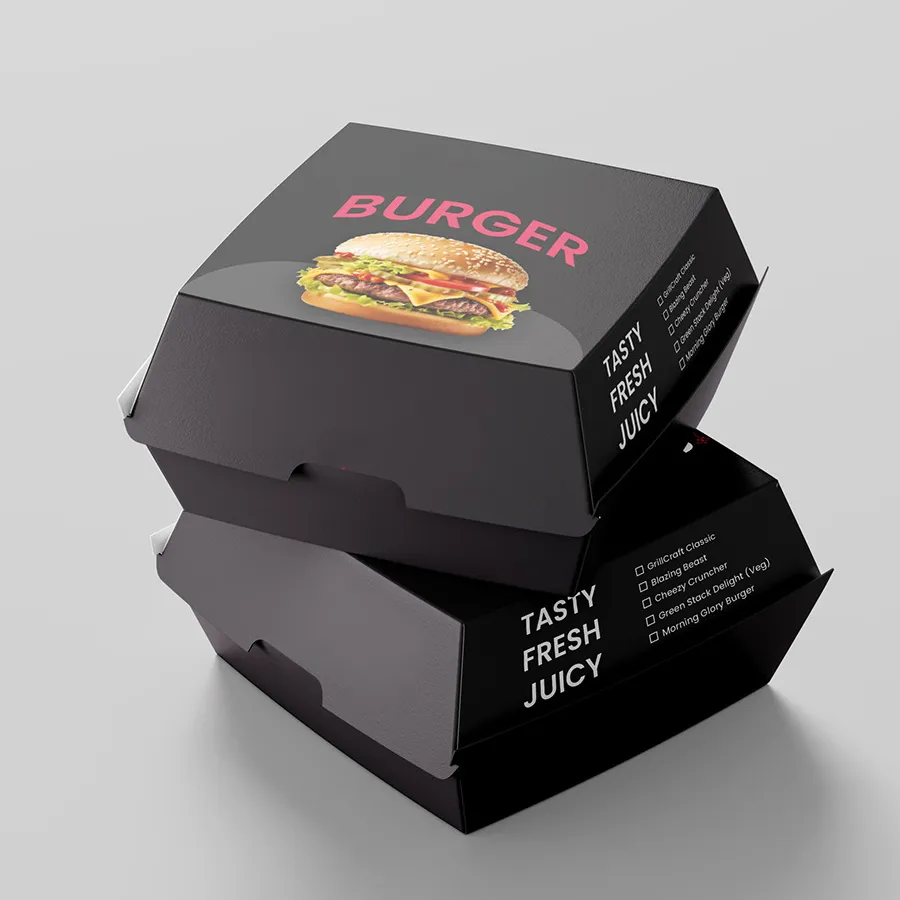
A clamshell burger box combines the lid and base in one structure. It is widely used in busy restaurants because staff can place the burger inside and close the lid quickly. Other available formats include tray-and-lid boxes, mailer-style cartons, handled boxes, and compartmented meal packages.
Businesses wanting a lighter format for immediate serving can coordinate their boxes with paper burger sleeves. Sleeves work well for dine-in and handheld service, while enclosed boxes provide additional protection for takeaway and delivery.
Burger packaging can be manufactured in small, medium, large, or completely custom dimensions. Small cartons are suitable for sliders, children’s meals, and promotional samples. Standard boxes hold everyday beef, chicken, fish, or vegetable burgers. Larger structures provide the height and width required for double patties, thick buns, additional toppings, and gourmet portions.
Restaurants serving snack-sized items can use mini burger boxes rather than placing small products inside oversized cartons. A closer fit reduces movement and creates a more intentional presentation.
Dimensions can also be adjusted for different bun shapes, including round, square, long, and specialty bread. The box should provide enough clearance around the food while remaining compact enough for efficient storage and transportation.
In addition to tailored dimensions, burger boxes can include various functional and decorative features. Ventilation holes can help manage steam, while locking tabs improve closure security. Internal dividers can separate burgers from fries, sauces, or other side items in a combined meal.
Optional features include:
The finished structure can be supplied flat to reduce storage requirements. Easy folding and assembly are particularly important for fast-food kitchens where employees must prepare many orders within a short period.
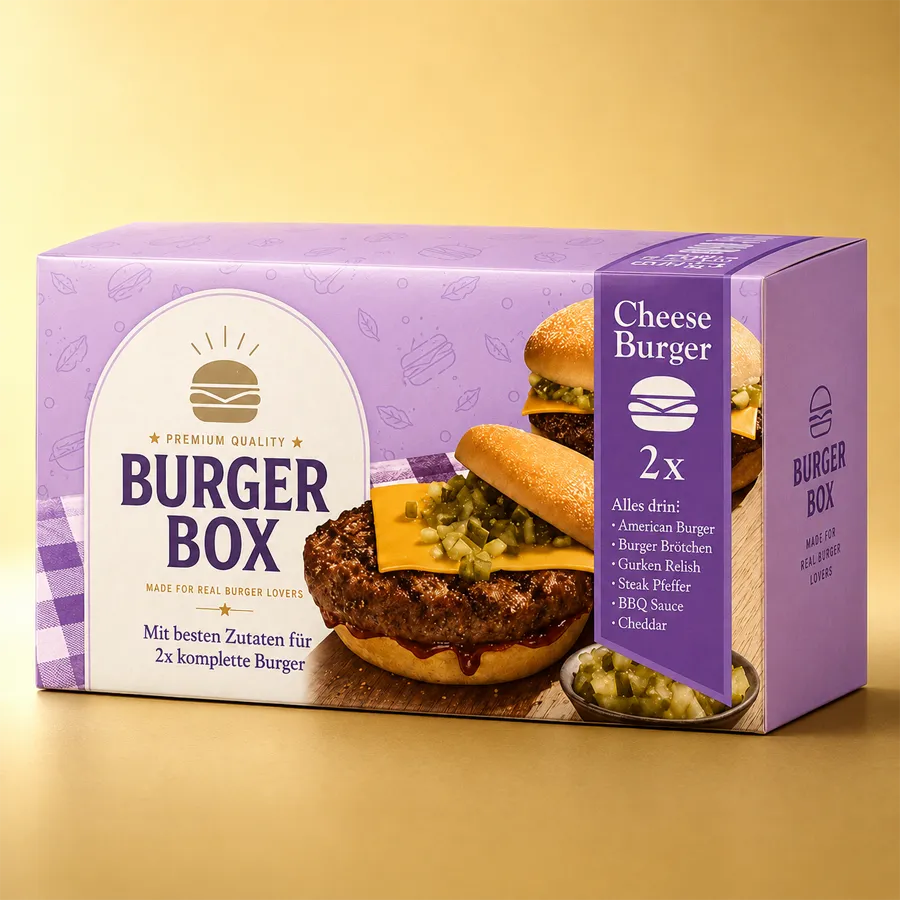
Printed burger boxes turn necessary food packaging into a visible part of your brand. Add your restaurant name, logo, signature colors, patterns, slogans, website, contact information, social media handles, menu details, and QR codes. Clear branding helps customers recognize the restaurant and can improve the appearance of takeaway and delivery orders.
Digital printing is suitable for detailed designs, smaller quantities, and changing promotional artwork. Offset printing delivers sharp graphics and consistent colors for larger orders. Flexographic printing may be appropriate for simple artwork and high-volume packaging.
Seasonal designs can be created for festivals, sporting events, holidays, limited-time menu items, or restaurant anniversaries. Separate colors may also identify different products, such as beef, chicken, fish, spicy, vegetarian, and plant-based burgers.
A matte finish creates an understated and modern appearance, while a gloss finish can make printed colors more vibrant. Spot UV may highlight selected elements such as a logo or product name. Foil stamping, embossing, and debossing can be used for premium restaurant concepts and gourmet burger ranges.
Any surface finish should be selected with the food-service application in mind. The packaging must remain practical to hold, assemble, store, and dispose of while maintaining the desired visual quality.
Delivery packaging needs to withstand more movement and handling than a box used only for dine-in service. The structure should remain closed while being placed in a delivery bag, transported by a rider, and handed to the customer. Strong materials and secure locking features help protect the burger during this process.
Restaurants handling longer journeys or grouped orders can select burger parcel boxes for additional support. Boxes should also stack efficiently without placing excessive pressure on the food inside.
Although an enclosed box helps protect the burger, it should not trap unnecessary moisture. Appropriate ventilation and properly selected materials can support a better balance between protection, temperature, and texture.
Custom burger boxes are suitable for businesses that prepare burgers regularly or offer them as part of a wider food menu. The packaging can be adapted for daily service, delivery operations, catering events, seasonal promotions, and large-volume commercial requirements.
Product-specific packaging improves fit, handling, storage, and presentation. A box designed around the actual burger dimensions can reduce unnecessary material and empty space. It also helps keep toppings arranged and prevents the food from moving excessively during delivery.
Printed packaging gives every order a consistent visual identity. When customers share pictures or videos of their meals, the branded box remains visible and can provide additional exposure. Clear product labeling can also help restaurant staff and delivery customers identify different burger varieties.
The Food Boxes manufactures burger packaging according to your menu, serving process, portion sizes, and branding requirements. You can select the material, dimensions, box style, grease resistance, ventilation, printing method, and finish that best suits your business.
Our customization options help prevent problems caused by poorly fitted packaging, including compressed buns, loose products, weak closures, and insufficient grease protection. Whether you operate a small food truck or a growing restaurant chain, the boxes can be developed according to your required quantities and visual identity.
Share your burger measurements, preferred material, box style, quantity, and artwork to create packaging that supports fresh presentation, secure handling, and recognizable restaurant branding.
Boxes can be created for sliders, regular burgers, double patties, and large gourmet portions.
Yes, suitable stocks and food-compatible barriers can improve grease resistance.
Yes, ventilation and steam-release cuts can be included where appropriate.
Yes, logos, colors, slogans, QR codes, and complete artwork can be printed.
Yes, kraft paperboard is available for a natural and understated appearance.
Yes, strong materials and secure structures can be selected for delivery orders.
Yes, one-piece clamshell structures can support quick restaurant service.
Yes, selected structures can include sections for fries, sauces, and side items.
Yes, separate colors and artwork can distinguish different menu items.
Yes, the length, width, height, and internal layout can be tailored to your products.
Don't let your products travel in a plain, boring box. Contact The Food Boxes today for a free quote and let us help you design packaging that supports your brand's journey.
Get Free Quote