
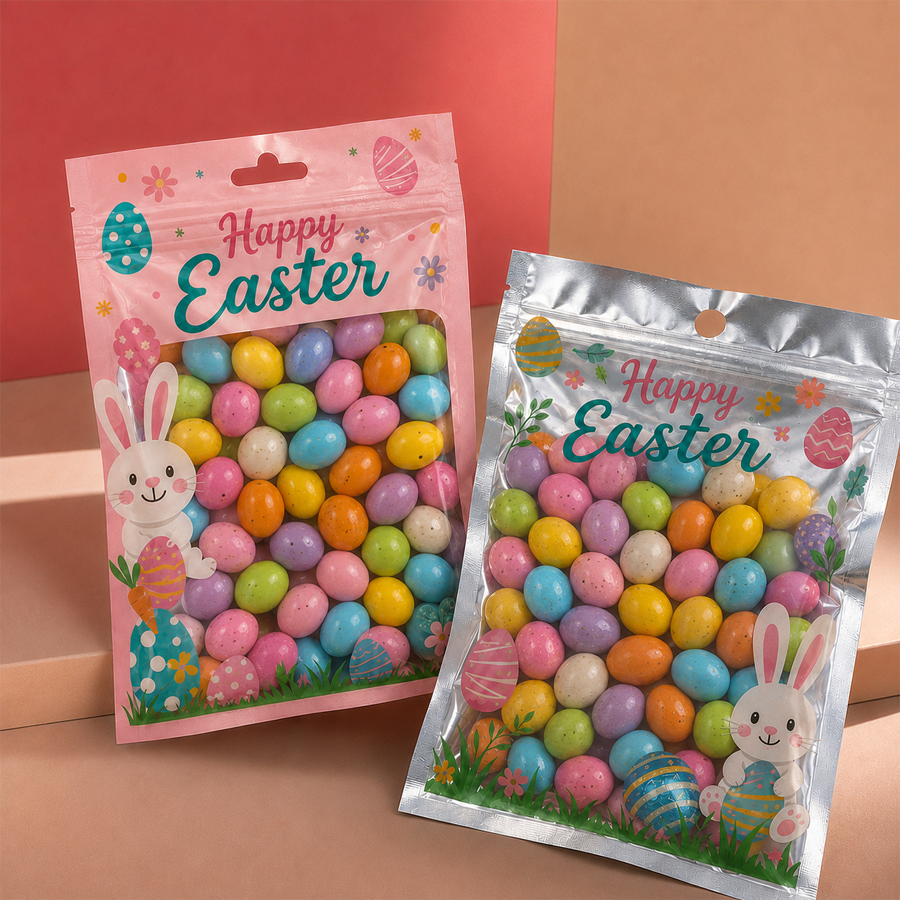
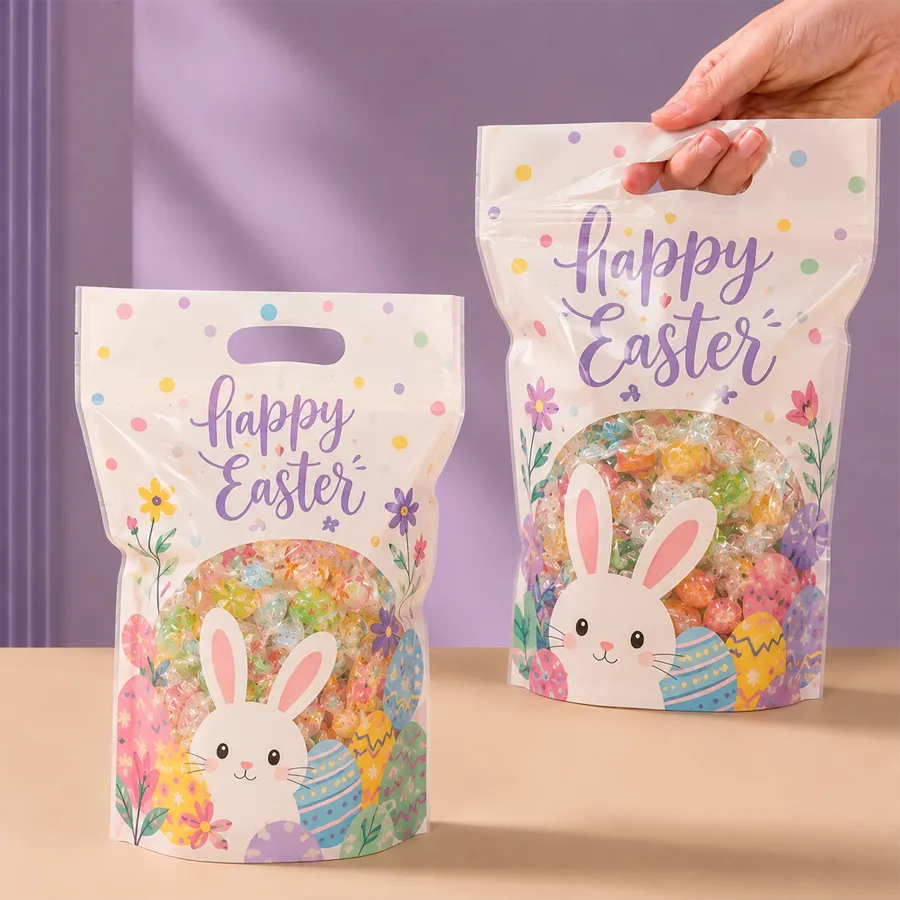

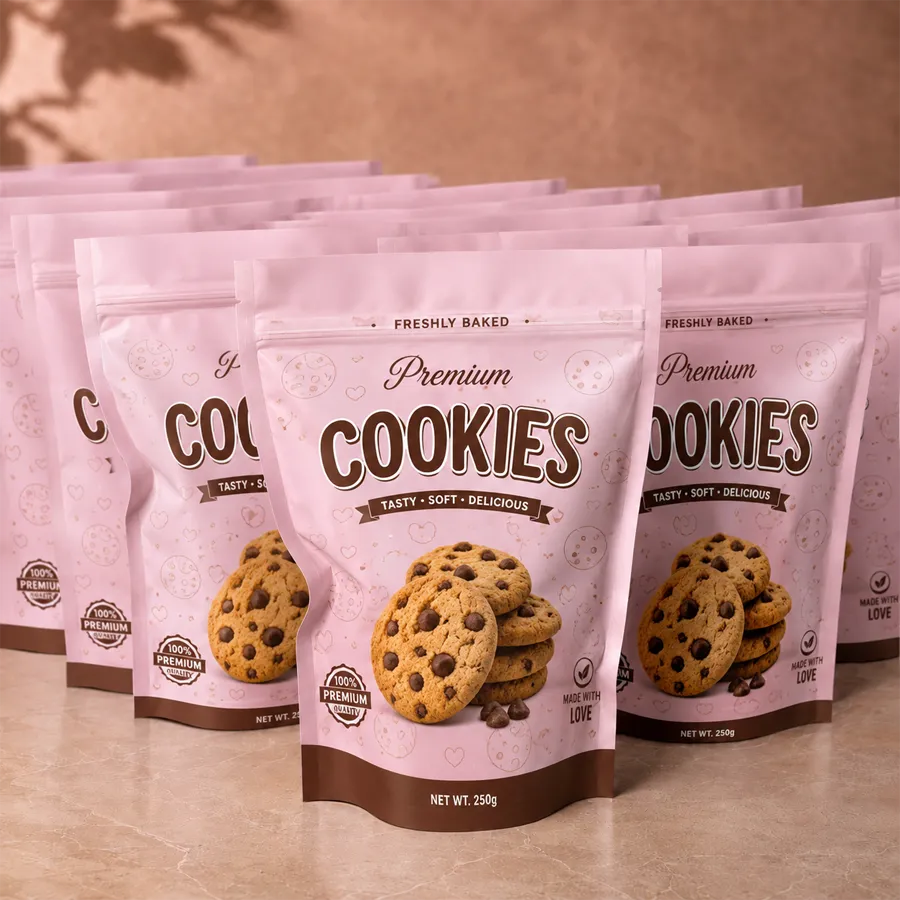
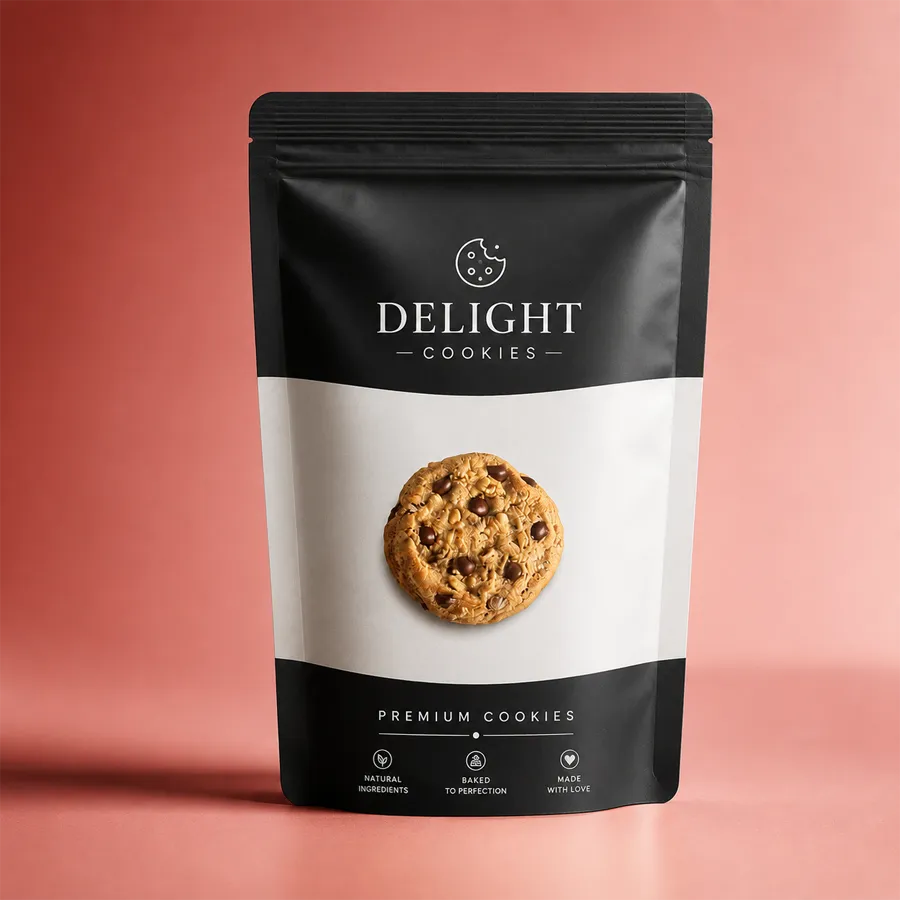
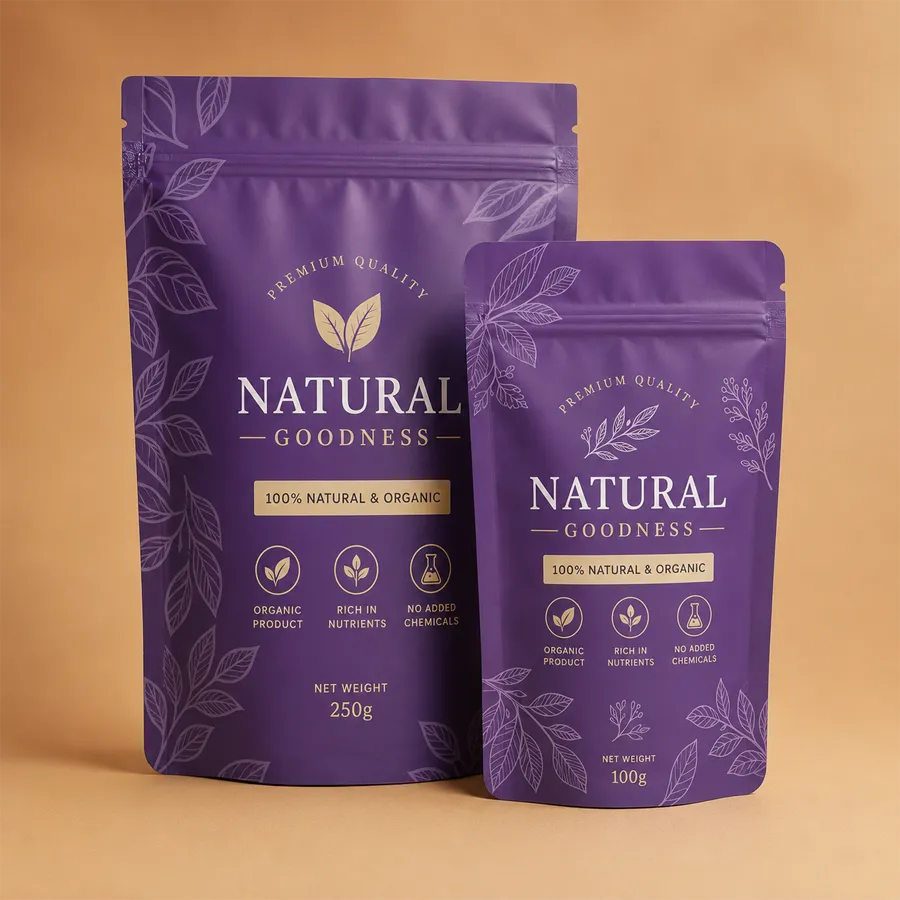
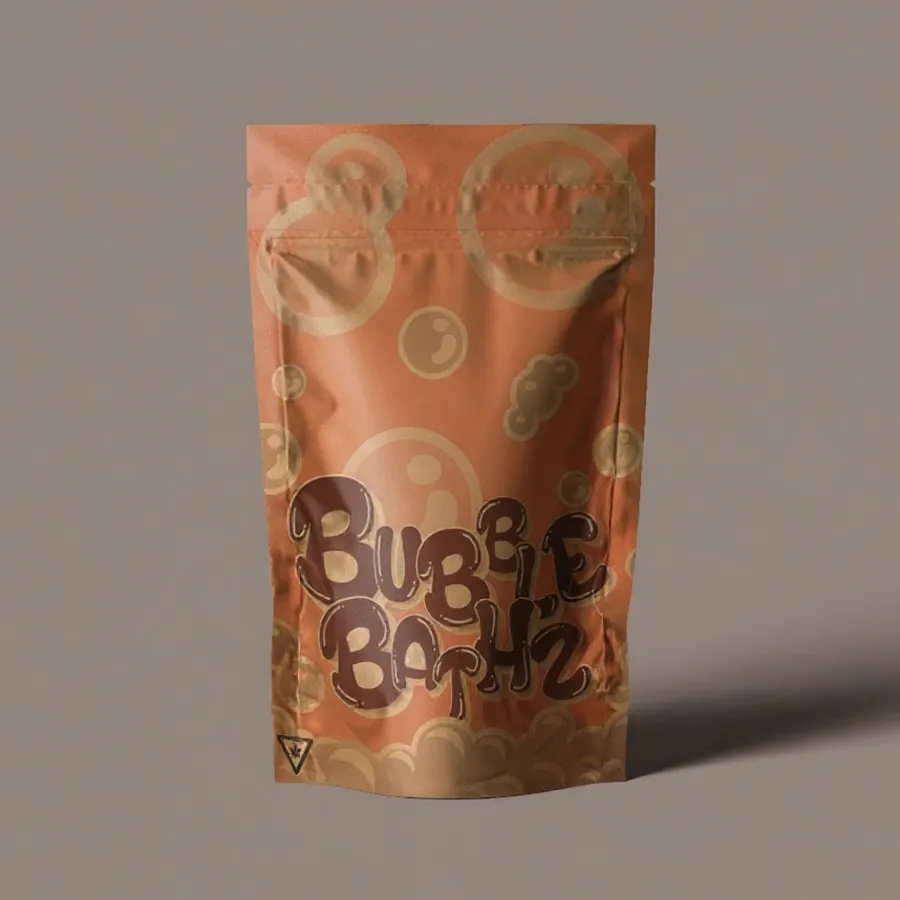
Package snacks, baked goods, confectionery, dry ingredients, and takeaway foods in custom food bags tailored to your products. Choose suitable materials, secure closures, windows, barrier layers, custom sizes, and branded printing for convenient storage and professional retail presentation.
Description
Custom food bags provide flexible and practical packaging for a wide variety of edible products. They can be designed for snacks, cookies, candy, baked goods, popcorn, coffee, tea, spices, grains, dried fruit, nuts, powdered ingredients, frozen items, and takeaway foods. Each bag can be tailored according to the product’s weight, moisture level, shelf-life requirements, serving quantity, and retail presentation.
The correct packaging material helps protect food from air, moisture, light, odors, dust, and unnecessary handling. Custom dimensions also reduce unused space and provide a more suitable fit than generic bags. Whether your products are sold individually, in family portions, or in commercial quantities, the structure can be adjusted to support their storage and handling requirements.
Businesses packaging products that require stronger protective barriers can consider food Mylar bags for enhanced product protection and branded presentation.
The material should be selected according to the characteristics of the enclosed food. Paper bags offer a natural appearance and work well for dry bakery items, takeaway products, and lightweight snacks. Kraft paper is commonly chosen by artisan brands, cafés, bakeries, and organic food businesses seeking a simple presentation.
Plastic films and laminated materials can provide greater resistance to moisture, air, and grease. Mylar and multilayer structures are useful for dry foods, confectionery, powdered products, and items requiring a longer storage period. Clear films may be used when full product visibility is important.
Some foods require a combination of materials. A paper exterior can support branding and shelf presentation, while an internal barrier layer improves resistance to oil, moisture, and oxygen. The material thickness and construction should correspond to the product weight and expected handling conditions.
Exposure to moisture and oxygen can affect the texture, aroma, color, and overall quality of many food products. Crispy snacks may become soft, while dry powders can form lumps. Tea, coffee, spices, and flavored products can lose aroma when their packaging does not provide an appropriate barrier.
Barrier packaging helps reduce contact with external air, humidity, odors, and light. The required level of protection depends on the food’s sensitivity, storage period, and distribution environment. Dry bakery products may need moderate protection, while coffee, herbs, and powdered mixes may require stronger layers.
Products intended to remain sealed until purchase can use heat-seal Mylar bags. Heat sealing creates a secure upper closure and can be combined with a resealable zipper for customer convenience after the initial opening.
Different bag styles offer different benefits for storage, filling, display, and customer use. Flat bags provide a simple format for individual servings and lightweight products. Stand-up pouches include a bottom gusset that allows them to remain upright on retail shelves.
Side-gusseted bags expand at the sides to hold larger quantities, while flat-bottom bags provide a stable base and additional printable panels. Three-side-seal bags are compact and suitable for snacks, spices, powders, samples, and single-serving products.
Common food bag structures include:
The bag closure affects product security, freshness, and ease of use. Heat-sealed tops provide tamper evidence and help protect products before purchase. Resealable zippers allow customers to open and close the package multiple times, making them suitable for snacks, coffee, tea, cereal, nuts, and family-sized portions.
Tear notches can make sealed bags easier to open without scissors. Tin ties are often used on paper coffee and bakery bags, while adhesive strips can support lightweight takeaway packaging. Selected structures can include valves, spouts, or specialized closures depending on the product.
The closure should be easy to operate while remaining strong enough for storage and transportation. Its position should also leave sufficient space for heat sealing, labels, batch codes, and printed information.
Custom food bags can be manufactured for samples, individual servings, standard retail portions, family packs, and wholesale quantities. The width, height, gusset depth, seal area, and opening can be adjusted according to the product volume and filling method.
A correctly sized bag prevents the product from appearing lost inside excessive packaging. It also makes cartons easier to pack and can improve shelf arrangement. Small pouches work well for spices, candy, tea samples, sauces, and individual snacks. Larger bags can package coffee, cereal, flour, pet treats, frozen products, and bulk ingredients.
The dimensions should account for more than the product volume. Space may be needed for sealing equipment, headspace, zippers, tear notches, valves, and printed branding. Testing the package with the actual product can help confirm an appropriate size.
Food bags can be customized through their dimensions, material, thickness, barrier level, color, transparency, closure, and printing. Clear windows can reveal the enclosed food, while fully opaque surfaces provide more room for branded artwork and protect light-sensitive products.
Optional features include:
The finished design can be adapted for manual filling or compatible production machinery. Brands should consider how the bags will be filled, sealed, stored, transported, and displayed before selecting the final structure.
Printed bags help customers identify the brand and understand the product. Your logo, colors, product name, flavor, ingredients, nutritional information, preparation instructions, storage guidance, net weight, barcodes, QR codes, and contact information can be incorporated into the artwork.
Different colors can distinguish flavors, serving sizes, or product ranges. A snack company may use separate visual themes for spicy, cheese, barbecue, and original varieties while maintaining the same overall brand identity.
Digital printing is suitable for detailed artwork, shorter runs, and designs that change regularly. Other printing methods may be selected for larger quantities depending on the material and number of colors required. The artwork should remain readable after the bag is filled, sealed, and displayed.
A transparent window allows customers to see the product before purchasing it. This is particularly useful for cookies, dried fruit, nuts, candy, pasta, granola, tea leaves, and colorful snacks. Windows can be rectangular, circular, vertical, or cut into a custom shape that supports the brand design.
The placement of the window should account for how the product settles inside the bag. It should reveal enough of the food without reducing the space required for ingredients, nutritional details, and branding.
Brands should also consider whether light exposure may affect the product. Fully opaque bags may be more appropriate for foods that are sensitive to light, even when visibility could improve shelf presentation.
Different foods benefit from product-specific structures and materials. Cookies require packaging that helps protect their texture and reduces breakage. Bakeries and snack companies can use cookies Mylar bags for sealed flexible packaging.
Confectionery products may require strong moisture barriers, colorful printing, and resealable closures. Brands selling sweets can choose candy Mylar bags for individual portions, assorted flavors, and retail packs.
Biscotti, rusks, and similar baked foods need space and suitable protection against moisture. Purpose-built biscotti Mylar bags can help maintain a consistent packaging system for these products.
Retail food bags need to look organized on shelves while providing clear product information. Stand-up structures improve shelf visibility, while hang holes allow smaller products to be displayed on hooks. Flat bags are convenient for counter displays and compact storage.
Takeaway food bags should be easy for staff to fill and close. Grease-resistant paper is useful for baked goods, sandwiches, fries, and other immediate-consumption foods. Delivery packaging may require stronger seals and thicker materials because products experience more movement during transportation.
The package should be tested for its expected use. A bag that performs well on a store shelf may require additional protection when shipped through a courier network.
Custom food bags can support small artisan producers, growing retail brands, commercial manufacturers, and food-service businesses. Their flexible format makes them suitable for a wide range of edible products and distribution channels.
Product-specific packaging provides a better fit, appropriate barrier protection, and a more intentional appearance. Custom sizing can reduce unused material and improve the number of bags that fit within shipping cartons. Suitable closures make products easier to store, open, and reuse.
Branded printing transforms the bag into a communication surface. It provides space for required product information while helping the package stand out in retail and online photographs. Consistent colors and layouts can connect multiple product varieties under one recognizable brand identity.
The Food Boxes develops custom food bags according to your product type, required shelf life, serving quantity, filling process, and visual identity. You can choose the material, dimensions, barrier level, closure, surface appearance, printing method, and additional features.
Our customization options help businesses avoid bags that are too weak, poorly fitted, difficult to seal, or unsuitable for the enclosed food. Whether you need compact pouches for samples or larger resealable bags for retail products, the packaging can be created around your operational requirements.
Share your product details, preferred capacity, storage needs, artwork, and order quantity to develop food bags that protect the contents and give customers a professional brand experience.
They can package snacks, cookies, candy, coffee, tea, spices, grains, powders, and other suitable foods.
Yes, materials can be selected according to the intended food-packaging application.
Yes, zipper closures are available for products requiring repeated opening and closing.
Yes, suitable structures can include heat-sealable upper sections.
Yes, clear windows can be incorporated to display the product.
Yes, ingredients, nutrition, storage instructions, barcodes, and other details can be printed.
Yes, the width, height, gusset, and seal areas can be customized.
Yes, bottom-gusseted stand-up structures can be produced for retail displays.
Yes, individual colors and artwork can distinguish flavors and product ranges.
Available appearances may include matte, gloss, metallic, transparent, and kraft-style surfaces.
Don't let your products travel in a plain, boring box. Contact The Food Boxes today for a free quote and let us help you design packaging that supports your brand's journey.
Get Free Quote