
Improve the handling and presentation of cups, trays, boxes, bowls, and takeaway containers with custom food sleeves. Choose food-safe materials, tailored dimensions, secure structures, and branded printing to create practical packaging for restaurants, cafés, bakeries, and food delivery businesses.
Description
Custom food sleeves are wraparound packaging components designed to fit cups, trays, bowls, cartons, tubs, and takeaway containers. They can provide additional support, improve handling, hold multiple packaging components together, or create a printable branding surface without requiring a completely new primary container.
A carefully fitted sleeve can make standard food packaging look distinctive and professionally branded. It may cover the center of a container, wrap around a tray, or slide over an enclosed food box. The dimensions and structure can be adjusted according to the container’s width, height, depth, shape, and intended serving method.
Restaurants and food manufacturers requiring sleeves for takeaway tubs and trays can consider food container sleeves designed around the dimensions of the primary package.
Food sleeves can perform several practical functions. They may strengthen a lightweight container, provide an additional gripping surface, secure a tray and lid, or help customers handle warm products. They also provide extra space for branding and product information when the original container has limited printable area.
A sleeve can be used to group multiple components, such as a tray with a lid or two small containers sold as one meal set. It may also act as a tamper-evident feature when positioned over the opening of a carton. The most suitable design depends on the primary packaging and how customers will use the product.
Because the sleeve is separate from the main container, businesses can change its artwork for seasonal promotions, flavors, menu variations, or limited-edition products while continuing to use the same underlying package.
Paperboard is widely used because it offers a balance of strength, flexibility, print quality, and easy folding. It provides a smooth surface for detailed designs and can be manufactured in different thicknesses according to the required support.
Kraft paperboard creates a natural brown appearance that suits organic food brands, artisan bakeries, cafés, and casual restaurants. White paperboard offers a clean base for bright colors and detailed artwork. Coated stocks may provide additional resistance to moisture, grease, and routine handling.
The material should be selected according to the food container and serving conditions. A sleeve wrapped around a chilled dessert tub may require different characteristics from one used on a warm takeaway tray. Thickness, coating, and structural design should be considered together.
Container sleeves can wrap around rectangular, square, circular, and oval food packages. They are suitable for ready meals, salads, desserts, noodles, rice dishes, bakery products, sandwiches, meal kits, and takeaway combinations.
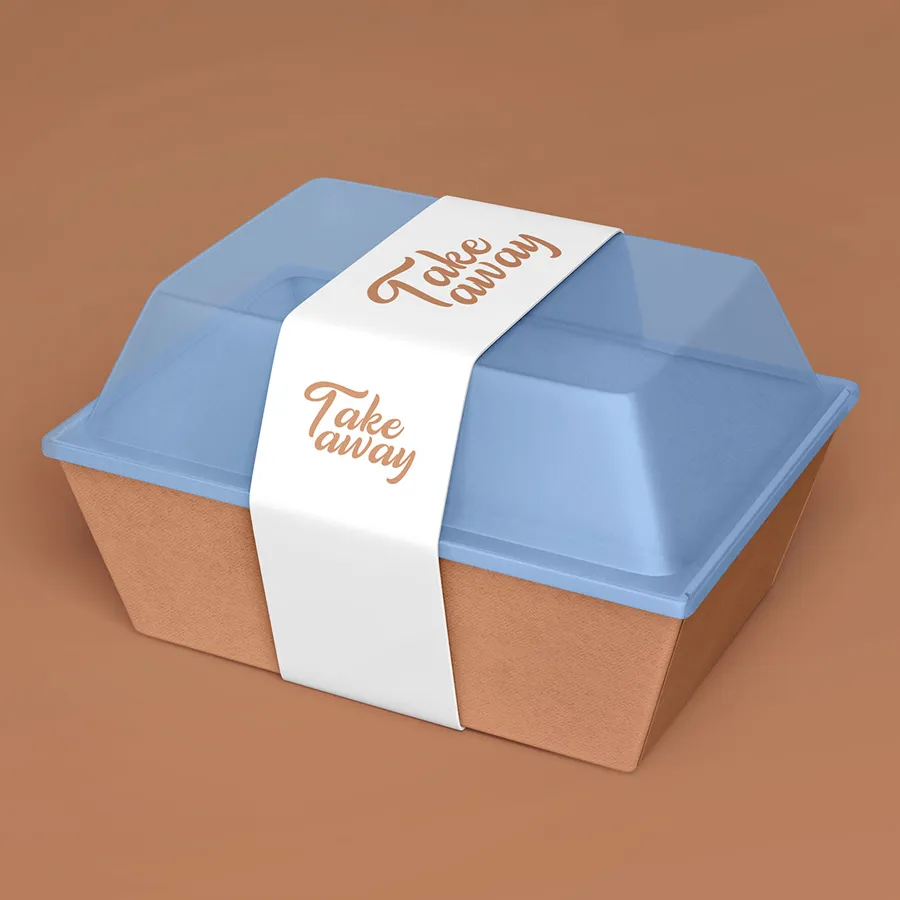
A tray sleeve can leave part of the product visible while still securing the container and providing space for branding. This is useful for clear-lidded packaging because customers can see the food while the sleeve carries product names, ingredients, nutritional information, and preparation instructions.
Sleeves can also hold a tray and lid together more securely. The sleeve dimensions should be precise enough to prevent unwanted movement but not so tight that employees or customers struggle to slide it over the package.
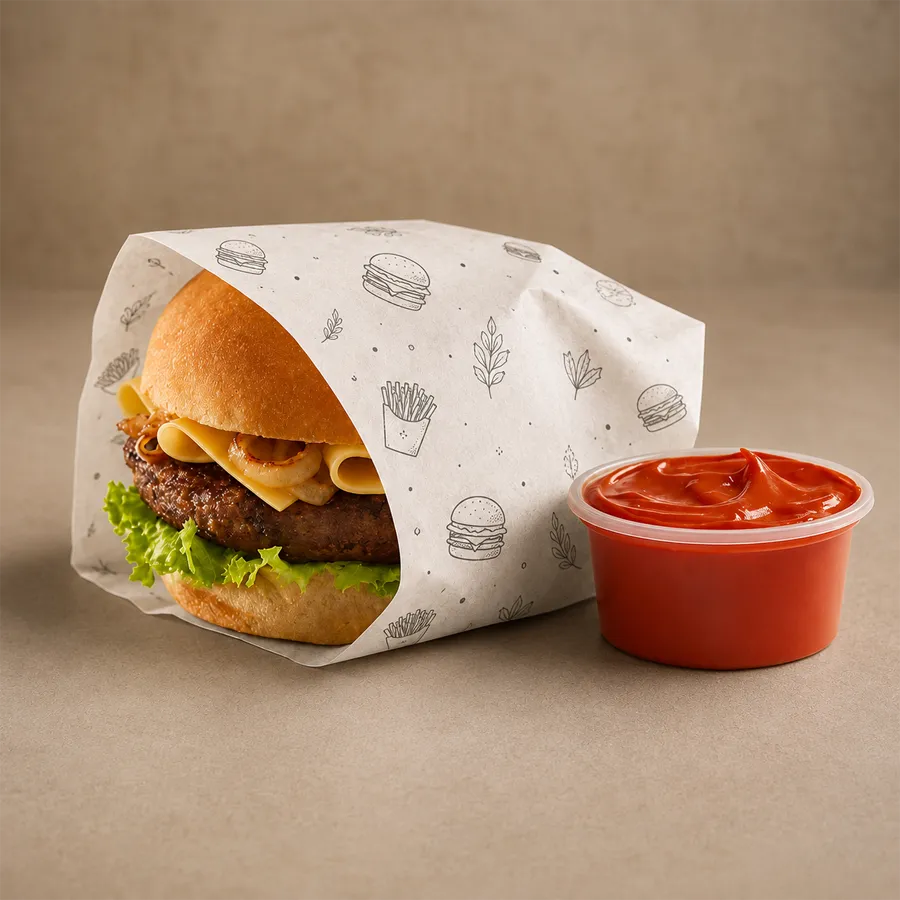
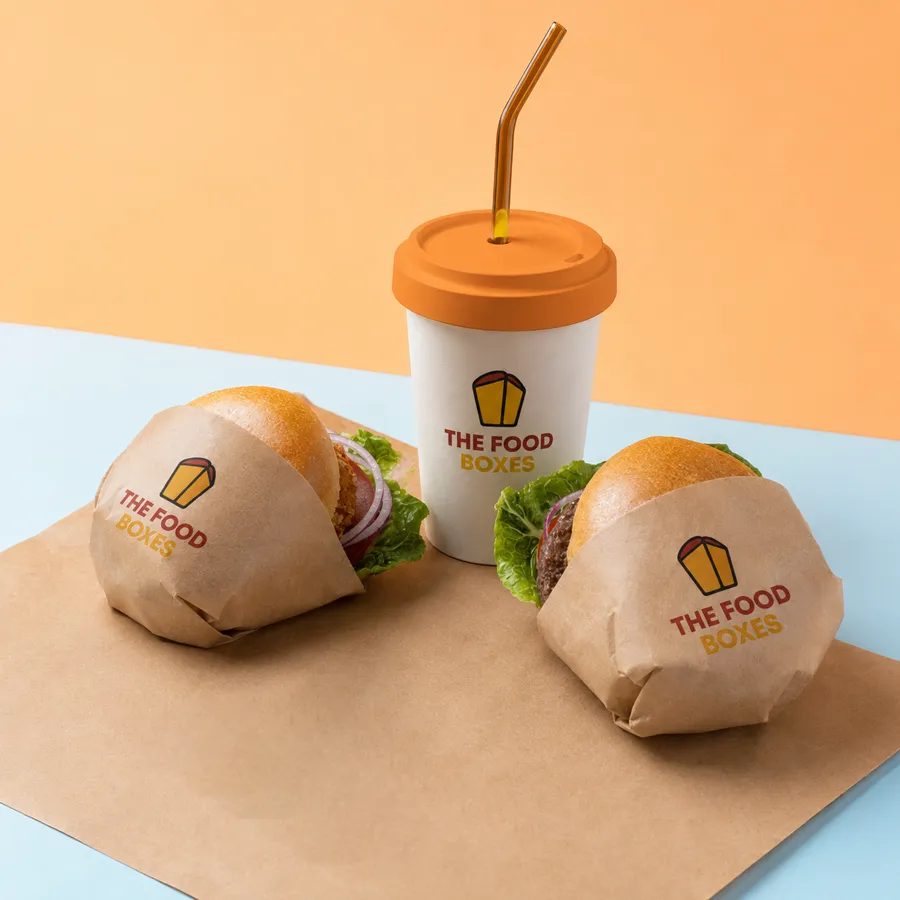
Burger sleeves are a compact variation designed to wrap around the lower section of a burger. Their open structure makes freshly prepared food easy to hold and eat while keeping the product partially visible. Restaurants can use burger sleeves for sliders, standard burgers, and larger gourmet portions.
Businesses wanting a natural paper appearance can select kraft burger sleeves, while printed paper burger sleeves provide a smooth surface for restaurant branding.
The sleeve should match the burger’s width and height without compressing the bun or fillings. Grease-resistant paper and suitable coatings help maintain a cleaner appearance during serving.
Food sleeves can also be adapted for beverage cups. A cup sleeve creates an additional layer between the customer’s hand and the drink container. It can improve grip, provide space for branding, and make hot cups more comfortable to hold.
The curve, circumference, and taper of the cup must be measured accurately. A poorly fitted sleeve may slide downward or fail to wrap evenly. Custom measurements allow the finished sleeve to follow the cup’s shape and remain positioned around its center.
Businesses offering hot beverages can coordinate sleeves with coffee paper cups. For drinks requiring greater thermal protection, double-wall paper cups provide an alternative structure.
Custom food sleeves can be manufactured in dimensions that match an existing container or a newly developed packaging system. The width, height, depth, overlap, locking area, and opening can all be adjusted. Samples or exact container measurements can help create an accurate fit.
Available customization options include:
The sleeve may be supplied flat for compact storage or pre-glued for faster assembly. The correct option depends on available storage space, employee workflow, and daily order volume.
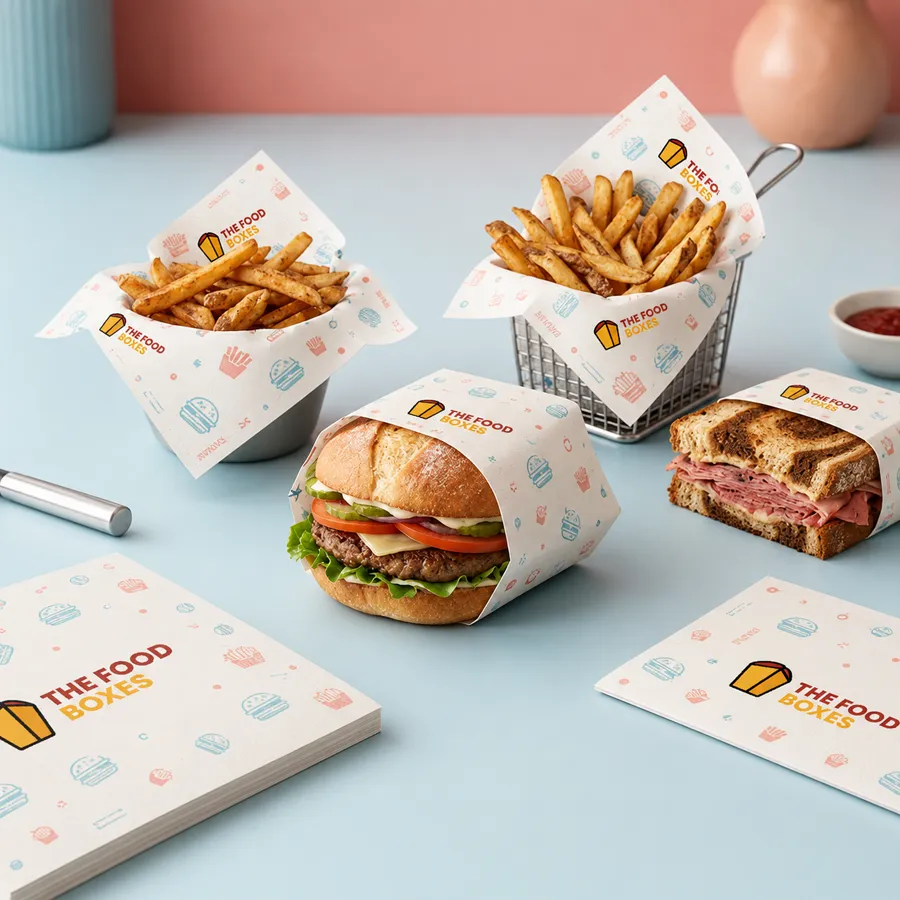
Custom printing transforms a plain sleeve into a visible marketing and information surface. Your logo, brand colors, patterns, product name, flavor, ingredients, nutritional information, preparation instructions, contact details, and promotional messages can be printed directly onto the material.
Different sleeve colors can distinguish meals, sizes, flavors, or dietary options. For example, a meal-preparation company might use separate colors for vegetarian, high-protein, low-calorie, and family-sized products while maintaining the same overall brand style.
Digital printing supports detailed artwork, shorter runs, and frequently changing designs. Offset or other production methods may be used for larger quantities. Artwork should be arranged according to the finished folds so important text and logos remain visible after assembly.
A matte surface provides an understated and modern appearance, while gloss lamination can make colors more vibrant. Spot UV can emphasize selected areas such as a logo or product name. Foil stamping, embossing, and debossing can create a more premium presentation for specialty foods, gifts, and high-end restaurants.
Food-compatible coatings may improve resistance to grease, condensation, and general handling. The selected finish should remain practical for the intended application and should not make the sleeve unnecessarily slippery or difficult to assemble.
Retail food products need packaging that communicates clearly while remaining visually organized. A sleeve can display the product name prominently while leaving part of a clear container uncovered. Customers can inspect the food while reading ingredients, allergens, serving details, and preparation guidance.
Retail sleeves may be designed for chilled meals, bakery trays, dessert tubs, snack packs, deli items, and ready-to-eat products. Barcode placement should account for the curve and final position of the sleeve so scanners can read it easily.
Retailers can also use sleeve colors and patterns to organize multiple product ranges on the same shelf. Consistent layouts make the brand recognizable even when individual products have different names and images.
Takeaway sleeves should be quick for restaurant staff to assemble and apply. They can wrap around trays, boxes, tubs, or cups without slowing down service. Pre-glued designs and simple locking tabs are particularly useful during busy periods.
For delivery orders, the sleeve can help secure lids and communicate whether the package contains a main meal, side dish, dessert, or beverage. However, it should not be treated as a replacement for a properly closed primary container. The food package must still provide suitable protection against spills and movement.
A coordinated design across sleeves, bags, boxes, and cups creates a more professional unboxing experience for delivery customers.
Custom food sleeves are suitable for businesses that want to improve the function or appearance of standard containers. Their adaptable structure supports retail, hospitality, takeaway, delivery, and event applications.
A product-specific sleeve provides a more accurate fit than a generic paper wrap. It can reduce sliding, improve handling, and position branded artwork consistently. Sleeves also allow businesses to update a standard container without replacing the entire packaging system.
They provide additional communication space for ingredients, allergens, instructions, barcodes, and promotional messages. When the primary container is transparent, a strategically designed sleeve preserves product visibility while giving customers the information they need.
Flat storage can also reduce the amount of space required in restaurants and production facilities. Employees can assemble sleeves when needed rather than storing large numbers of fully constructed packages.
The Food Boxes develops custom sleeves according to your container dimensions, food type, service process, and branding requirements. You can select the material, thickness, shape, closure, printing method, finish, and protective features needed for your packaging.
Our customization process helps avoid loose sleeves that slide off containers or overly tight designs that are difficult to assemble. Whether you need sleeves for burger service, beverage cups, ready-meal trays, bakery containers, or retail products, the design can be developed around the actual package.
Share your container dimensions, product details, preferred material, artwork, and order quantity to create food sleeves that improve handling and give every item a consistent branded appearance.
They can fit cups, trays, bowls, cartons, tubs, boxes, and suitable takeaway containers.
Yes, every dimension can be adjusted according to the primary container.
Yes, suitable materials can be selected for the intended food-packaging application.
Yes, suitable coatings can improve resistance to grease and moisture.
Yes, custom die-cut windows can leave selected parts of the container visible.
Yes, logos, colors, product details, and complete branded artwork can be printed.
Yes, tapered sleeves can be created according to the cup’s dimensions.
Yes, a properly fitted sleeve can help hold compatible packaging components together.
Yes, flat supply can reduce storage space and support on-demand assembly.
Yes, separate colors and artwork can distinguish products, portions, and dietary options.
Don't let your products travel in a plain, boring box. Contact The Food Boxes today for a free quote and let us help you design packaging that supports your brand's journey.
Get Free Quote